
An accessible toilet is designed to provide independence. But independence must not come at the cost of safety.
For persons with disabilities, a simple slip or moment of discomfort inside a toilet can quickly become a distressing situation. In such moments, calling for help should be immediate and effortless.
That is why emergency call systems are critical.
A Clear Regulatory Expectation
- The Harmonised Guidelines and Standards for Universal Accessibility in India 2021 issued by the Ministry of Housing and Urban Affairs recommend emergency alarm systems in accessible toilets.
- This places responsibility on hospitals, commercial buildings, educational institutions, malls and public facilities to ensure that every PWD toilet is equipped with a reliable emergency alert mechanism.
- It is not merely good practice. It is a compliance requirement.
How a Wireless System Works
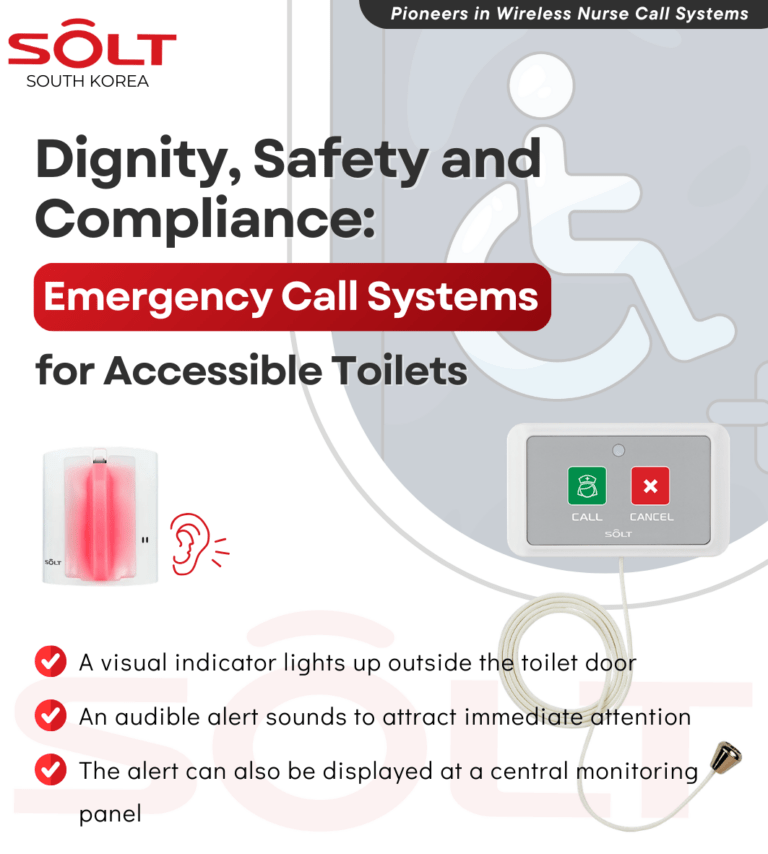
Inside the accessible toilet, a wall-mounted emergency button or pull cord is installed within easy reach.
When activated:
• A visual indicator lights up outside the toilet door
• An audible alert sounds to attract immediate attention
• The alert can also be displayed at a central monitoring panel
The light outside clearly identifies which cubicle requires assistance. The audio indication ensures that the alert is not missed in busy corridors.
There is no need for the person inside to shout or knock repeatedly.
Quick Installation Without Structural Changes
Because the system operates on safe 433 MHz RF technology, no extensive wiring is required. It can be installed in new buildings or retrofitted into existing facilities with minimal disruption.
Maintenance is low and battery replacement cycles are predictable.
More Than Compliance
An emergency call system in PWD toilets is not just about following guidelines. It is about dignity, reassurance and responsible design.
When assistance is needed, help must be visible, audible and immediate.